Warm floor, hissing, wet carpet: how a slab leak shows itself
A slab leak can be a slow seep or a fast soak, so treat any sign below as urgent. Our 24/7 line is open if you see one. While you wait, close the main shutoff, blot standing water, keep off wet floor near outlets, and write down the meter reading and the time.
A warm patch on the floor
Only a hot water line makes a patch that stays warm. Compare it with a spot you know is dry.
Hissing or rushing sound
Listen in a quiet house with every tap closed. A faint hiss or running sound from the floor or a wall base is a classic clue.
Damp carpet or lifting flooring
Musty carpet, swelling baseboards or new tile cracks. Water under a slab often wicks up at the edges first, including along a garage wall.
A meter that moves with all water off
A dial that turns with every fixture closed means a loss on the line or inside. The meter test on our leak detection page narrows it.
What a slab leak is, and why slab homes get them
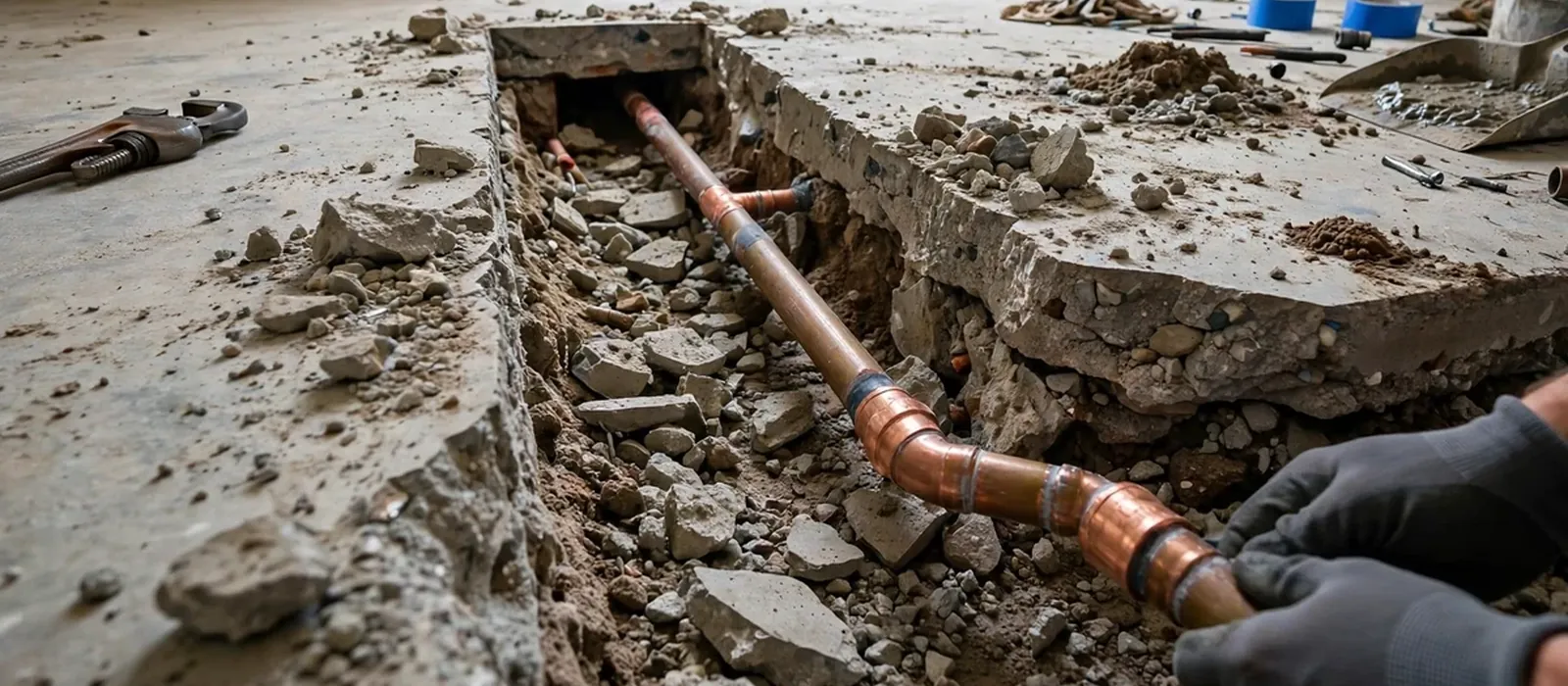
A slab leak is a leak in a water line that runs through, under or against the concrete foundation slab of a house. In slab-on-grade homes, supply lines and drain lines are often set beneath or inside the concrete, out of sight and out of reach.
Why the hot line usually goes first
Hot lines expand and contract every time the heater cycles, and a pipe that rubs against concrete or gravel wears slowly. Corrosion and a flawed joint add to it.
What we will not do over the phone
We do not diagnose a slab leak from a description. A meter test and an on-site pinpoint decide it, because a damp floor can also come from a toilet, a drain or the air conditioner.
Warm spot or hissing floor?
Tell dispatch what you feel and what the meter does, and we will plan the first visit around a slab line.
When a slab leak is an emergency
Water under a slab does not drain away on its own. Call at any hour for these.
Water is showing through the floor
Shut the main, lift belongings, and call. If water sprays from an exposed pipe rather than the floor, see burst pipe repair. Do not wait for daylight if water keeps coming with the main closed.
The floor is cracking, lifting or soft
A new crack with a wet spot, or a tile that rocks, suggests the slab is losing support. Stay off it and tell dispatch.
The meter races with the main open
A fast-spinning dial with the house quiet means a large leak. Closing the main stops the loss.
A faint warm spot, but no water
This can wait for a same-day appointment when available. Keep the main closed overnight only if the meter moves fast.
Night and weekend calls reach the same dispatch line. After-hours visits are for water reaching finished flooring or the foundation edge. We do not promise an arrival time, but dispatch will say what can wait until morning.
Spot repair, reroute or tunnel: the honest trade-offs
National cost guides disagree widely on what a reroute costs, which tells you the price depends on the house.
Fix the pipe where it lies
- Opening the floor above the leak is direct, but it means removing flooring, cutting concrete and matching the finish.
- Tunneling under the slab from outside skips the floor, but needs open ground and a clear path to the pipe.
- The old line stays in the slab, so its other weak spots remain.
- It suits one clean leak on otherwise sound pipe.
Reroute the line
- New pipe runs through walls or the attic and the slab line is capped off.
- It costs more up front and opens drywall or ceilings instead of the slab.
- It fits repeated leaks or pinhole corrosion.
- It rearranges pipes, so it can need a city permit.
One leak on a healthy line favors spot repair. A second leak on the same line, or corroded pipe at the opening, favors rerouting, and a house with several tired lines may suit a whole-house repipe. We explain which the pipe in front of us points to before you agree.
What drives the price of a slab leak repair
No honest plumber names a slab leak price before finding the leak. These factors set the number afterward.
Homeowners policies typically respond to sudden and accidental damage and not to wear, gradual leaks or the pipe itself. A slab leak sits in a gray area because the water damage may be covered while the repair of the line is not. Ask your insurer before work begins and photograph the damage.
Ocoee ground conditions and permit rules that affect a slab repair
Two local questions come up on slab leaks here: what the ground is doing, and what the city requires.
Florida limestone and sinkhole worries
The Florida Geological Survey says the whole state is underlain by carbonate rock, so sinkholes could theoretically form anywhere. It lists broken sewer and drain pipes among things that mimic sinkhole activity. A soft spot near your foundation may be a broken pipe, so have the plumbing checked first.
Lakes with karst features
The city's 2002 growth plan says karst features around lakes such as Starke Lake and Lake Olympia cannot be effectively regulated through the plan. Near one of them, report any sinking or cracking to dispatch and consider a foundation professional too.
Fast-draining sand moves water
USDA describes the Candler sand series as excessively drained on peninsular Florida uplands. It does not name Ocoee, so we do not claim your lot has it. Where soil drains fast, slab leak water can exit at a slab edge, far from the break.
Permits go through the Building Division
Ocoee lists plumbing among work needing a building permit. Apply at permits.ocoee.org or at City Hall, 1 N. Bluford Ave., phone 407-905-3104. The Florida Building Code exempts repairing a pipe leak that does not replace or rearrange pipes, and a reroute does rearrange them, so confirm the scope with the city.
A tunnel from the yard means digging, and Florida law requires a call to Sunshine 811 at least two full business days before breaking ground. Tell dispatch early if you expect outside access.
From first call to dry floor
Here is how a slab leak visit usually runs, whether the address is in Ocoee or a neighboring town such as Windermere.
Confirm it is the slab line
The plumber reads the meter, closes the house shutoff and rechecks. That separates a slab or buried line from a fixture, irrigation or a toilet.
Pinpoint the spot
Acoustic listening, thermal imaging and pressure testing are common methods. The goal is a mark on the floor, so any opening is small.
Choose the repair and hear the price
You see the options: spot repair, tunnel access or rerouting. You hear a clear price before work starts and decide.
Repair, test and permit
The line is repaired or replaced and pressure tested before anything is closed. If pipes were rearranged, permit and inspection follow. You can verify any plumber's Florida license on the state myfloridalicense.com Verify Licensee page.
Slab leak questions from Ocoee homeowners
Yes. Dispatch runs at night and on weekends for water that is reaching finished floors or the foundation edge.
A warm spot with no water can usually wait for a same-day appointment when available. We do not promise an arrival time, but dispatch will tell you what can wait and what cannot.
The Florida Geological Survey says broken sewer and drain pipes can mimic sinkhole activity. A leak that washes soil away deserves quick attention.
For suspected ground movement, the Survey helpline is 850-245-2118. The state does not inspect possible sinkholes, so a licensed plumber and a foundation professional are the usual next calls.
Ocoee lists plumbing among permitted work. The Florida Building Code exempts repairing a pipe leak that does not replace or rearrange pipes, and a reroute rearranges them.
Confirm the scope with the Building Division at 407-905-3104. We cannot rule on a city permit for you.
Shut off irrigation, run the two-hour meter test and fix any running toilet. If the meter still moves, the loss is a line leak. A warm patch or a hissing sound under the floor makes the slab a stronger suspect.
The leak detection page walks through the steps.
Published national guides disagree widely, especially on rerouting, so we quote no range here. Cost follows depth, method, the condition of the line and the finish to restore.
You get a clear price before work starts.