The bill climbed, the meter never stops, and nothing looks wet
A leak you cannot see still costs money every hour, so treat a running meter or a growing stain as urgent. Our 24/7 line is open now. While you wait, close the main shutoff if water is visibly spreading, lift belongings off wet floors, and write down the meter reading and the time.
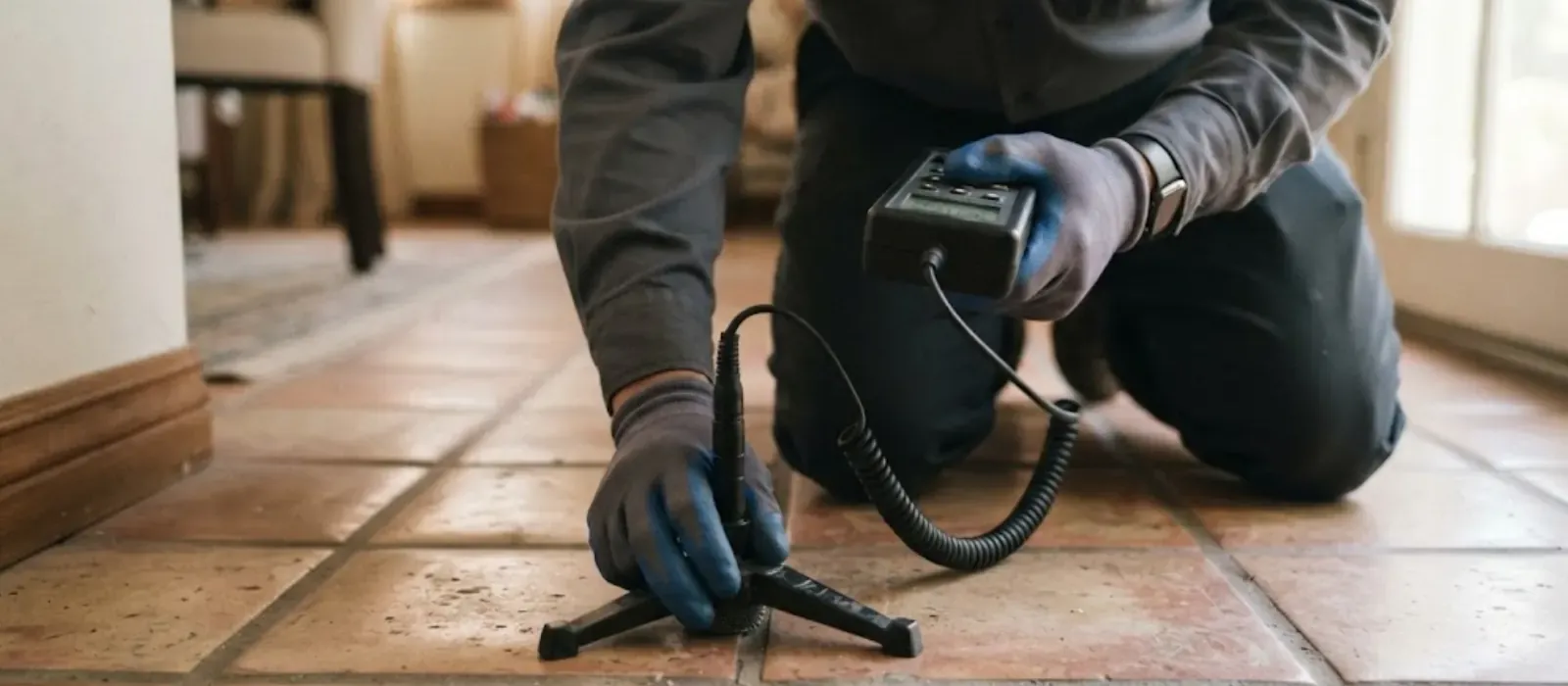
Emergency leak detection in Ocoee means finding the exact spot where water escapes a pipe before anyone opens a wall, floor or yard. The goal is a marked location, not a guess. Water follows the easiest path, so a ceiling stain can sit several feet from the pipe that feeds it.
The calls we hear most are plain ones. The bill crept up for months. The meter turns with every faucet closed. A bathroom wall feels damp, or one patch of lawn stays green and soft. Landlords of small multifamily buildings ask which unit, or which side of the meter, the water is coming from.
We do not name a leak location over the phone. A short meter test comes first, and the next section shows how to run it. Your readings tell dispatch whether to plan for a slab leak, a buried line or a fixture. Plain leak repair is generally treated as maintenance under the Florida Building Code, while replacing or rearranging pipe can need a permit, so ask the Ocoee Building Division before work that goes beyond a repair.
The two-hour meter test you can run yourself
This test comes from the EPA's WaterSense home maintenance guidance. It costs nothing and takes two hours, most of which you spend doing something else. The EPA also notes that a family of four using more than 12,000 gallons a month in winter, with no outdoor watering, likely has a serious leak. If you irrigate in winter, that number will not fit your house, so lean on the meter test instead.
Stop every use of water
Close all taps and make sure the dishwasher, washer, ice maker and irrigation timer are not running. Nobody flushes during the test.
Find the meter and read it
The EPA says meters are usually underground near the curb. Lift the box lid carefully, read the numbers and take a photo. The City of Ocoee does not publish reading steps, so if a dial confuses you, call the Utilities Department at 407-905-3159.
Wait two hours, then read again
Use no water in between. If the numbers changed, you probably have a leak. While you wait, drop a few drops of food coloring in each toilet tank and look at the bowl after ten minutes. Color in the bowl means a leaking flapper.
Close the house shutoff and read once more
Shut the main valve where the line enters the house, wait a few minutes and watch the meter. If it still moves, the leak is on the buried line between meter and house. If it stops, the leak is inside. A valve that will not close fully needs its own repair.
Meter still moving after the test?
Give dispatch your two meter readings and what the house shutoff changed, so the visit starts with a plan.
Active leak: when to shut off the main and call tonight
Not every leak is a flood. These four situations are the ones where waiting until morning costs you more than the call does.
Water is spraying or pooling
Shut the main valve first, then call. Do not hunt for the source with the water still running. Mop and move rugs only after the supply is off.
Water is near outlets or the panel
Stay out of the wet area. Switch off a breaker only if you can reach the panel on dry floor. Otherwise tell dispatch and wait outside the room.
A ceiling is bulging or sagging
Water is pooling above it and the drywall can drop without warning. Keep people and pets out from under it and place a bucket where it drips.
The meter runs but nothing is wet
This is urgent but quiet. Shut the main overnight if the dial is moving fast, and ask for a same-day appointment when available instead of an overnight visit.
Night and weekend calls reach the same dispatch line as weekday calls. After-hours visits are for active damage, and a stable stain can usually wait for a same-day slot. Tell dispatch what the meter test showed.
Symptom, likely location, and how the leak is found
Detection is a process of narrowing down. A technician chooses methods by the symptom, because no single tool finds every kind of leak.
| What you notice | Where the leak is likely | How it is usually found |
|---|---|---|
| Meter moves with every fixture off | Buried line between meter and house, a supply line inside, or a toilet flapper | Shutoff test to split inside from outside, then pressure testing and acoustic listening along the line |
| Bill rises slowly over months | Dripping fixture, toilet, irrigation line or a weeping joint | Dye test, fixture inspection, overnight meter comparison with irrigation off |
| Brown stain on a ceiling | Supply or drain above, or air conditioner condensation, or the roof | Moisture meter and thermal imaging, then watching whether the stain grows only when a fixture is used |
| Warm floor patch or hissing underfoot | A hot water line in or under the slab | Acoustic listening and thermal imaging, then a pressure test on the suspect line |
| Soft, green or soggy strip in the yard | Buried supply line or an irrigation pipe | Pressure test of each zone, then listening along the route to mark the spot |
Acoustic listening, thermal imaging and pressure testing are common methods. Plastic pipe carries sound poorly, and thermal imaging shows temperature differences, not water itself, so a technician usually combines more than one.
Hidden leak signs, room by room
Look for the slow clues. Most hidden leaks announce themselves weeks before a bill does.
Ceilings
Brown rings that darken after use of an upstairs bath, paint that bubbles, or a musty smell in one corner.
Walls
A cool, damp section of drywall, peeling paint, or baseboards that swell. A faint trickle sound behind a wall at night is worth reporting.
Floors
Cupped wood, loose tile, a warm patch, or carpet that stays damp. If the smell is sewage and not just damp, a sewer camera inspection can tell a drain leak from a supply leak.
Yard and driveway
A soft strip, a patch of unusually lush grass, or water seeping up along a driveway edge. A buried line can run quietly for a long time.
Pool and spa
A pool that drops faster than neighbors' pools, or wet ground near the equipment pad. Supply, return and drain lines are plumbing. Shell and skimmer leaks are often a pool contractor's job.
What is different about finding leaks in Ocoee
Ocoee runs its own water, sewer and reclaimed water utility, so a few local facts change how you chase a leak.
The Customer Portal is a built-in leak alarm
The city's Sensus Analytics portal shows usage in near real time and lets you set daily threshold alerts and suspected-leak alerts. Help is at 407-905-3159. Set the threshold just above a normal day, and an overnight spike becomes your meter test without lifting the lid. The city's current rate sheet raises the price per thousand gallons as monthly use climbs, so an unnoticed leak gets costlier each week.
The meter is where the city's job ends
The city's service form says it maintains the meter and delivery system up to and including the meter. You maintain everything from the meter to the house and the fixtures. A leak on the house side is yours to find and fix, and a leak at the meter itself is a call to Utilities.
Irrigation and reclaimed water hide leaks
The city supplies reclaimed water for irrigation to residential and commercial areas, and its rate sheet lists reclaim as a separate charge. Check which line of your bill grew before assuming the house is leaking. Irrigation problems on reclaim go to Utilities at 407-905-3159. Reclaimed water is not drinking water and must never be cross-connected to house plumbing.
A dry yard does not prove a dry pipe
Where soil drains fast, leaking water can sink below the surface and never show. USDA describes the Candler sand series as excessively drained on Florida's peninsular uplands, and we cannot say which Ocoee lots have it. Trust the meter result over the look of the lawn.
One address exception matters. The city's 2025 water quality report says Forest Lake Estates is supplied by Orange County Utilities, not Ocoee. If you live there, confirm which utility reads your meter before you call about usage. We cover Ocoee and nearby areas such as Pine Hills.
What decides the cost of finding a leak
People ask about price first, and that is fair. Here is what drives the number, so it makes sense when you hear it.
Ask your insurer before the visit whether the cost of finding a leak is covered, because policies differ and some treat it as your expense even when a claim follows.
Insurance and leaks: sudden versus gradual
Homeowners policies typically respond to sudden and accidental water damage. They generally do not pay for wear, long-term seepage or the leaking pipe itself. A leak that soaked a floor over several months can land on the gradual side of that line, so ask your insurer how it would treat yours.
Photos and meter readings help any claim. Write down the date you first noticed the symptom, keep the bills that show the rise, and keep damaged material until the adjuster has seen it. Shutting off the water promptly also shows you took reasonable steps to limit the damage.
Leak detection questions Ocoee homeowners ask
Yes. Dispatch runs through the night and on weekends for active damage such as spraying water, a flooding floor or a ceiling that is sagging.
A steady meter reading with no wet spot is a different case. You can shut the main overnight and book a same-day appointment when available, which keeps the visit calm and the plan clear. We do not promise an arrival time on the phone.
Yes. The City of Ocoee Customer Portal shows usage in near real time and can send daily threshold alerts and suspected-leak alerts. Utility Administration answers portal questions at 407-905-3159.
If the portal shows steady overnight use while the house sleeps, that pattern matches what the two-hour meter test looks for.
The city's service form puts the meter and the delivery system up to and including the meter on the city. From the meter to the house is the customer's side. A wet spot at the curb box is worth a call to Utilities, and a wet spot between the curb and the house is usually yours.
The city labels 407-428-5766 as its after-hours emergency line, though its page does not say that number is only for leaks.
Detection is meant to avoid that. The aim is to narrow the search to one small area so any opening stays small.
Once the leak is found, the plumber explains whether it can be reached through an access panel, a ceiling cut or the floor, and you hear the price before work starts.
A tenant should report the symptom to the owner or manager, because the owner decides on repairs. The owner or manager can then call us with the unit numbers, where the stain is, and what the meter does.
In a building with several units, tell dispatch whether the building has one meter or several. That decides where the shutoff test starts.
Turn the irrigation controller off, then run the two-hour meter test. If the meter stays still, the water use is your sprinklers, not the house. If it moves, a line is losing water.
On Ocoee reclaimed water, look at the reclaim portion of the bill separately, because the city lists it as its own charge.
Detection marks the spot. Then you choose between fixing the line in place and rerouting it, and the slab leak repair page explains those trade-offs. A burst line that is spraying is handled differently, and burst pipe repair covers that case.