What a camera inspection finds in a sewer line
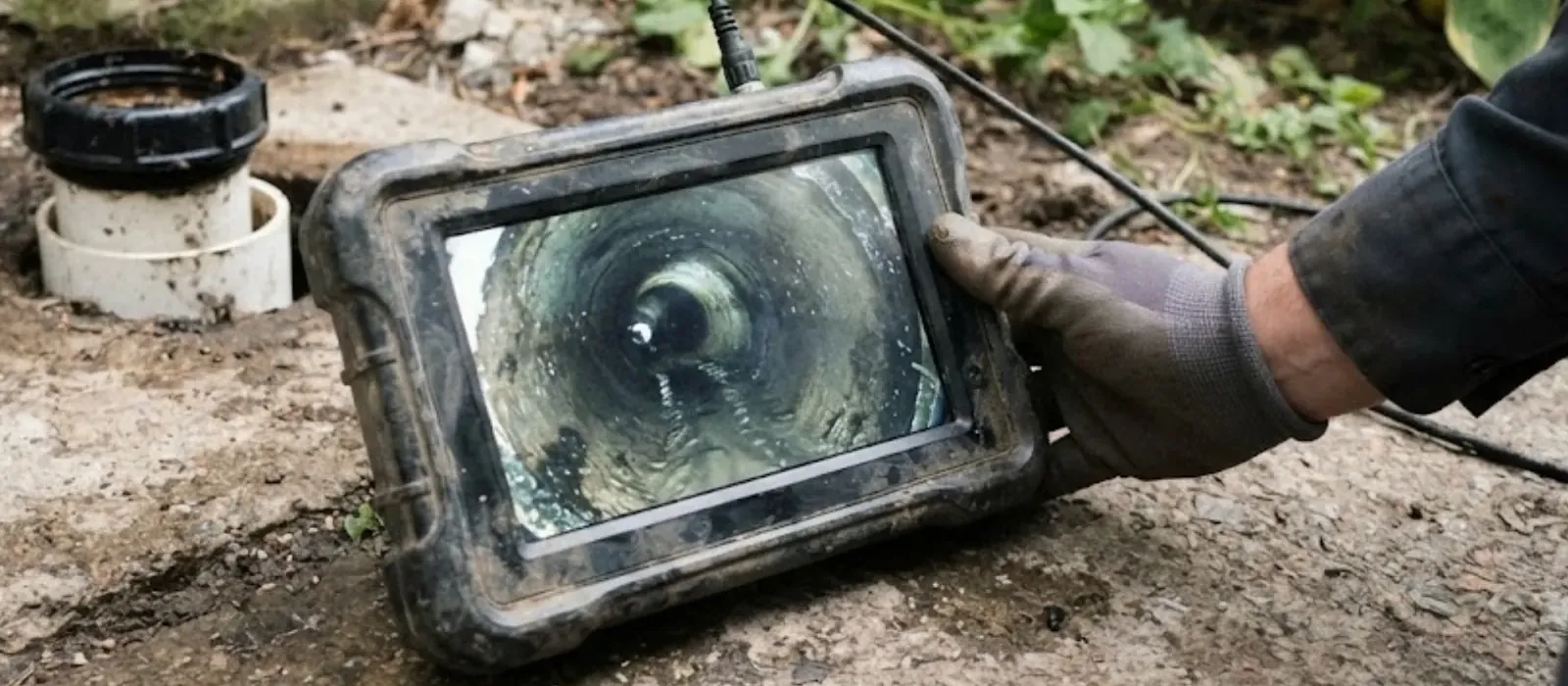
A sewer camera inspection is a small waterproof camera pushed through your drain line on a flexible rod, so a plumber can watch the pipe's inside on a screen. It turns a guess about a clog into a picture.
On that picture a technician looks for roots entering joints, cracks, pieces that have shifted out of line, low spots where water sits, and a grease coat that narrows the pipe. Each one points to a different fix, and some point to no repair at all. Ask what defect-coding system the plumber uses on the video, such as NASSCO's PACP, because a coded report is easier to compare with a second opinion.
When a camera inspection is worth scheduling
Not every slow drain needs a camera. These situations usually do.
- You are buying a home and want the sewer line checked before closing.
- The same drain clogs again within weeks of being cleared.
- Several fixtures gurgle or back up together.
- A sewer smell shows up indoors or near the outdoor cleanout.
- A wet or sunken strip of lawn appears and the irrigation checks out fine.
- A remodel will add a bathroom, laundry or kitchen to an old line.
- Roots were cut from the line and you want to see the damage they left.
A smell inside the bathroom is not always the main line. A floor drain or p-trap that has dried out, or one that leaks and cannot hold its water seal, lets gas up too. The camera tells us whether the line is sound, and a plumber then checks the trap separately.
If the line proves clean, simple drain cleaning or a trap repair may be all you need.
Book a look inside the pipe
Call to schedule a camera inspection, or ask for a same-day appointment when you have an active backup.
The inspection, start to finish
The visit follows the same order every time, so you know what is happening and why.
Find the way in
The camera enters through the outdoor cleanout when there is one. If not, a plumber may pull a toilet or open a vent on the roof to reach the line.
Run the camera
The technician feeds the rod while watching the screen and a distance counter. That counter records how far from the entry point each problem sits.
Mark the spot above ground
A locator tuned to the camera head can pinpoint the position and depth of any defect on the surface. This keeps a later repair small and well aimed.
Review what was seen
You look at the findings with the technician, and a clear price is given before work starts if a repair makes sense. A blocked line must be cleared first, so we may suggest sewer line cleaning before the camera can pass. Real damage leads to sewer line repair.
What a camera can and cannot show
The camera is a strong tool with edges. Knowing them keeps the results from being oversold.
What it can show
- Roots entering at joints and how thick they are.
- Cracks, breaks and missing pipe sections.
- Joints that have shifted out of line.
- Low spots where water stands.
- Grease or scale coating the inside of the pipe.
- How far from the entry point each problem sits.
What it cannot show
- Anything past a full blockage or a collapsed section.
- Pressurized supply pipes, which are a separate system.
- How many more years the pipe will last.
- Who owns or must repair the stretch that is damaged.
- A trap or vent problem that sits outside the sewer line.
A clean recording does not rule out every cause of a smell or a slow drain. It rules out the sewer line, which is the expensive suspect, and points the search at branch drains, traps or vents.
What affects the cost of a sewer camera inspection
The price depends on the job in front of the plumber. These are the factors that change it.
Homeowners insurance usually responds to sudden and accidental damage and rarely covers wear, slow root growth or the pipe itself. A camera inspection is a diagnostic cost. If you are buying, ask your agent and lender how an inspection result can be used in the sale.
Ocoee houses, older and newer, and what to ask the seller
Ocoee has grown in layers, and the age of the street tells you where to look first.
Mostly newer housing
A city housing report built on Census data, dated 2000, says almost all of Ocoee's homes went up after 1960. We found no published list of pipe materials by decade, so the camera, not the street name, shows what your lateral is made of.
Downtown and the oldest homes
The City's own history ties downtown to land platted in 1886, so some homes there are far older than the rest. Older sewer pipe is more likely to have worn joints, which is the main reason to check before buying.
Roots
UF/IFAS says roots grow well wherever moisture and nutrients are available, and roots can reach three to four times the drip line. A mature tree beyond your property line can still reach your lateral, so check the camera footage, not just your own yard.
Sewer or septic
The City's 2002 sewer plan says septic tanks were used for some homes, and the Orange County Health Department permits them. We found no current list of which addresses use septic. Confirm in writing which one your address has, because a septic tank needs a different inspection.
Questions for the seller
Ask whether the line was ever cleared for roots, whether there is a permit record for plumbing work, and where the cleanout is. A seller who cannot answer is a reason to book the camera, and the Building Division at 407-905-3104 can tell you how to ask about permits.
We also dispatch to nearby Pine Hills for camera work on older lots.
What you get to see, and the honest limits
You can watch the monitor while the camera moves, and a good technician explains each frame. Before the visit, ask whether footage is recorded and handed over, and what a written summary includes. Policies differ between companies, so we do not promise one here.
A camera shows the pipe's condition on that day. It cannot promise the line will last or that nothing else is wrong. If the footage is clean and the problem continues, the next place to look is a branch drain, a trap or a vent.
Questions about sewer cameras in Ocoee
It depends on the length of the line, how easy the access is and whether the pipe needs cleaning first. We do not quote a fixed time, because a blocked line changes the job.
It is worth it when the home has mature trees, a history of backups or is older. The camera shows roots and breaks that a home inspector's visual check cannot see. If the report finds trouble, you have facts for the price talk.
It can show cracks, open joints and soil visible through a break. A small seep may not show up on every run, and the camera does not see pressurized water pipes, which a leak detection visit covers instead.
Yes, with a camera head that sends a signal and a locator held above ground. The locator marks position and depth on the surface. Nobody should dig on the strength of that mark alone, because Florida law requires a Sunshine 811 locate first.
The camera helps show whether the damage is in your lateral. The City of Ocoee's sewer manual defines the lateral as running from the public sewer to five feet outside the building wall. We found no clear ownership rule, so ask City Utilities at 407-905-3100.