The quick way to tell if a slab leak is likely
A slab leak is a leak in a water line that runs under or inside the concrete floor of your home. You cannot see it, so detection starts with the water meter. If the meter keeps moving while every tap, toilet and appliance is off, water is leaving the system somewhere. Once you rule out toilets and outdoor lines, a leak under the floor becomes the likely answer.
No home test can pinpoint a slab leak to a spot on the floor. What you can do is collect evidence in about two hours so a plumber starts with real information. That evidence also separates a slab leak from the cheaper leaks that fool many homeowners.
Run the meter test in four steps
This follows the EPA's home maintenance method, plus one common extra step that helps place the leak. Do it when nobody will use water for two hours.
Find the meter and read it
EPA says the meter is usually underground near the curb. Lift the cover carefully, note the reading and write it down. Ocoee's pages do not describe its meter faces, so call Utility Administration at 407-905-3159 if the dials confuse you.
Shut off every water use
Close taps and make sure the dishwasher, washer, ice maker and irrigation are not running. Check that no toilet is refilling.
Wait two hours and read it again
EPA says a changed reading means you probably have a leak. A reading that has not moved means the plumbing is holding at this moment.
Close the main valve and repeat
Shut the main valve where water enters the house, then read the meter again after a short wait. If it still moves, the loss is on the line between the meter and your valve. If it stops, the leak is in the house plumbing, which includes the pipes under the slab.
Meter still moving with everything off?
Call Ocoee Express Plumbing with your meter readings and we will tell you what to do next.
Common reported signs of a leak under the slab
Plumbers and leak specialists report these signs often. We did not find a primary government source that confirms them, so treat them as clues and not as proof.
A warm or hot patch on the floor
A leak on a hot water line can warm the concrete above it. Bare feet on tile often find it first.
The sound of running water at night
A hiss or trickle with every fixture closed is worth a meter check the next morning.
Damp carpet, lifted flooring or a musty smell
Moisture rising through the slab can lift laminate or stain a baseboard from below.
Low pressure or a bill that jumped
Water lost before it reaches the tap can lower pressure and raise the bill.
A crack that is new and wet
A hairline in a wall or floor that stays damp is more worrying than a dry one.
What you see and what to do next
Match what you notice to the next sensible step.
| What you see | What it may mean | What to do |
|---|---|---|
| Meter moves with everything off, stops when the main valve is closed | Leak inside the house plumbing, possibly under the slab | Stop using water you do not need and call for leak detection |
| Meter keeps moving even with the main valve closed | Leak on the line between the meter and the house | Call a plumber. This stretch of pipe is on your side of the meter |
| Meter is still, but a toilet runs or hisses | Toilet flapper or fill valve, not a slab leak | Add food coloring to the tank and wait ten minutes. Color in the bowl confirms a leak |
| Warm floor patch and a normal meter reading | May be a warm pipe run, a sun-warmed area or a leak too small to show yet | Repeat the meter test later and watch the bill |
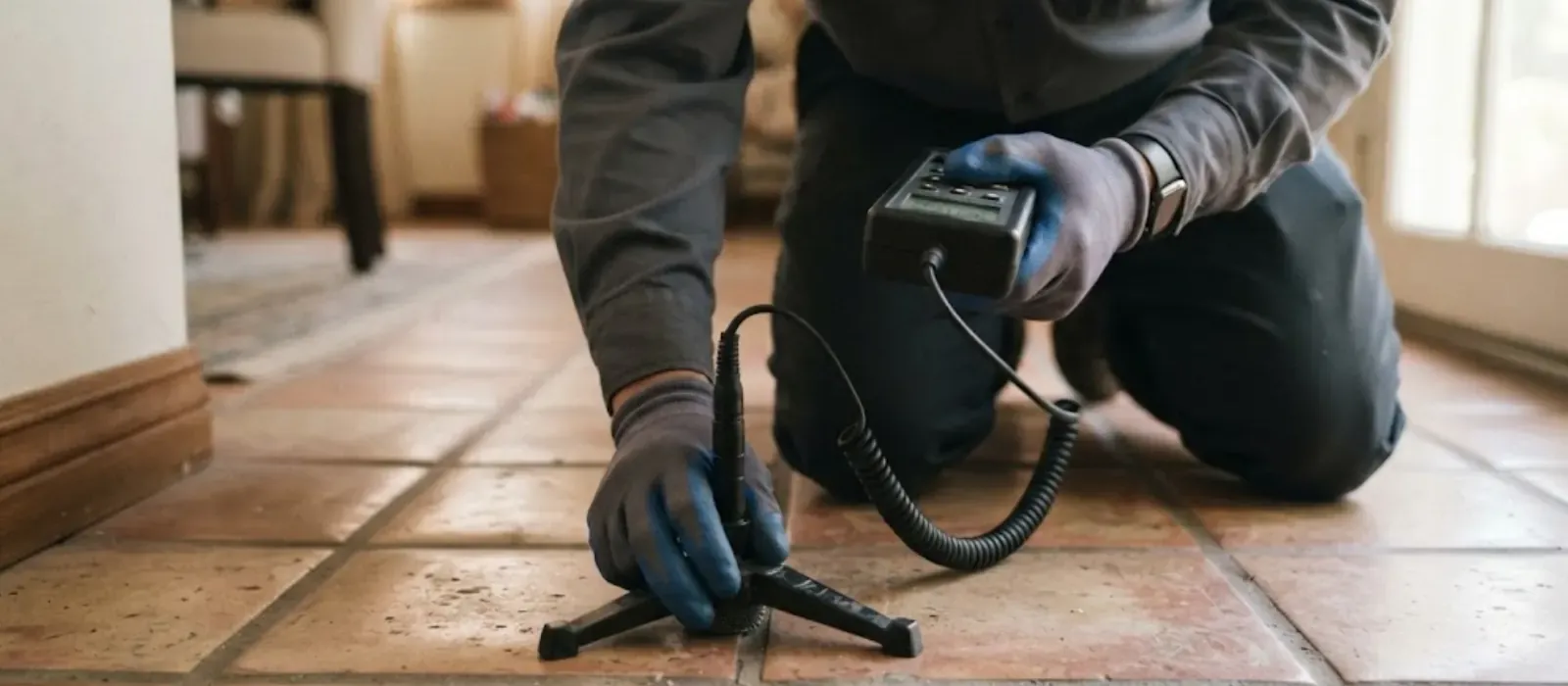
These are screening steps. A plumber can confirm the location with tools that listen to or trace the pipe without opening the floor.
Ocoee meters, portal alerts and where the city's job ends
The City of Ocoee's utility form says the city maintains the delivery system up to and including the meter, and the customer maintains everything from the meter to the house and the fixtures. A slab leak sits on the customer's side. That means the repair is the homeowner's responsibility, so confirm the leak is real before you commit to it.
Ocoee offers a Sensus Analytics Customer Portal where you can watch your usage in near real time. You can set daily consumption alerts, and the city says you can be alerted when a leak or problem is suspected. A flat, steady overnight line on that chart can support what the meter test showed. Call 407-905-3159 for portal help.
Ocoee's own Leak Detection page lists toilet flappers, faucets and showerheads as common leaks and says leaks can waste hundreds of gallons a day. It does not give meter steps, which is why we use the EPA method above. EPA also says winter use above 12,000 gallons a month for a family of four with no outdoor use likely points to a serious leak.
Source type: City of Ocoee Customer Portal, Leak Detection and Utility Customer Service Request Form, plus EPA WaterSense home maintenance guidance
When the evidence points to a plumber
If the meter moved with the main valve closed on the house side, or the meter test and portal both show steady loss, schedule a professional leak detection visit. Locating the leak first usually keeps repair work smaller than guessing. After it is located, the choices are laid out under slab leak repair.
Ocoee Express Plumbing dispatches licensed plumbers to Ocoee, Winter Garden and Apopka. We do not claim to diagnose a slab leak by phone. Until someone arrives, closing the main valve stops the loss and protects the floors.
Slab leak detection questions Ocoee homeowners ask
Use the EPA steps. Read the meter when no water is being used, then read it again two hours later. A change means you probably have a leak. Ocoee's pages do not give meter instructions, so call 407-905-3159 if you cannot read your meter.
Yes, through the city's Sensus Analytics Customer Portal. It shows usage in near real time and offers threshold alerts and suspected-leak notices. Check that the overnight line stays flat when you know nothing is running.
We cannot say that it does. The Florida Geological Survey says the whole state sits on carbonate rock, so sinkholes could form anywhere. It also lists broken sewer and drain pipes as causes of ground sinking that can mimic a sinkhole, and it advises against putting water into holes.
If the ground near the house is sinking, call a licensed plumber and a foundation professional. FDEP does not inspect possible sinkholes.
Yes, at the main valve where water enters the house, if you can reach it safely. That stops the loss while you arrange leak detection. You will have no running water until it is back on.