White spots on the glass and a pool smell from the tap
White film dries on the shower door. A crust builds inside the faucet aerator. The kitchen tap smells faintly like a swimming pool. Those are three different complaints, and each one has a different fix.
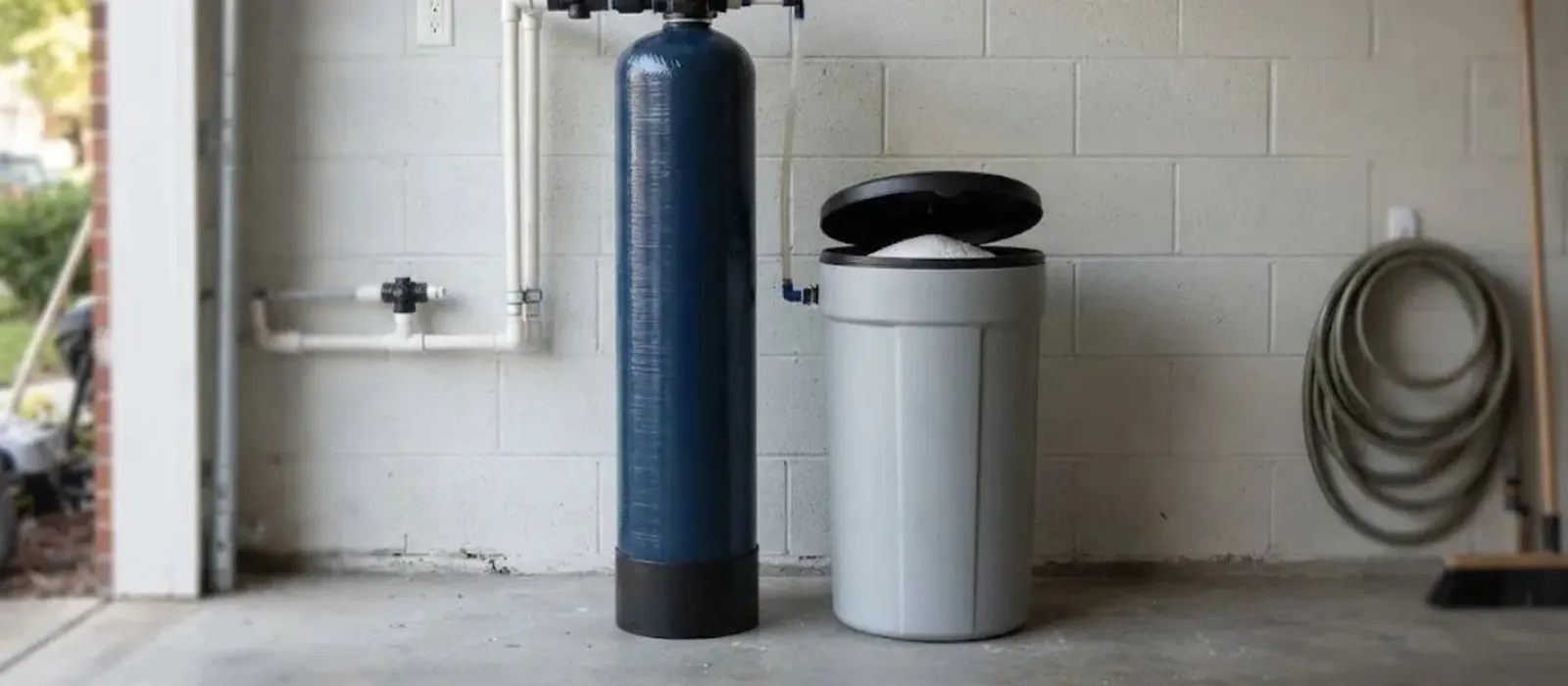
A water softener is a tank of resin beads that swaps the calcium and magnesium in your water for sodium or potassium, which is what prevents scale. Filtration is a separate job. A carbon filter reduces chlorine taste and odor, and a reverse osmosis unit polishes drinking water at one tap.
For a home in Ocoee, FL the useful question is which complaint you actually have. Match the equipment to that complaint before you spend money on a system that solves a different problem. Ask whether a softener is certified to NSF/ANSI 44, the national standard for residential cation exchange softeners, because the label tells you what the unit was tested to do.
What Ocoee Utilities reports, and what it means at your tap
The Ocoee Utilities 2025 water quality report lists these values. The water is groundwater from the Floridan Aquifer, aerated and chlorinated.
| Reading | Reported value | What it means in your home |
|---|---|---|
| Hardness | 5 to 6 grains per gallon (calcium 31 to 32 ppm, magnesium 30 to 32 ppm) | Moderate on the city's own scale, where soft is under 5 and hard is over 12. Expect spots and some scale, not heavy buildup. |
| pH | 7.8 to 7.9 | A little above neutral. A softener does not change it much. |
| Alkalinity | 79 to 103 ppm | Helps the water resist pH swings. With hardness, it adds to scale when water is heated. |
| Chlorine | 0.6 to 2.2 ppm in 2025 | The disinfectant, and the usual source of a pool-like taste. A softener does not remove it. A carbon filter reduces it. |
| Sodium and fluoride | 10.0 ppm and 0.75 ppm | A softener adds some sodium, so raise it with a doctor if you follow a sodium-restricted diet. Reverse osmosis also reduces fluoride, which some households want and some do not. |
These values are for the city's main service area. Forest Lake Estates is supplied by Orange County Utilities.
Unsure whether you need treatment at all?
Describe the spots, scale or taste you see, and a dispatcher can book a plumber to look at the water and your plumbing.
Softener, carbon filter or reverse osmosis: what each one solves
Each device handles one job well and the others poorly. Mixing them up is the most common way to overspend.
Whole-home softener
- Solves scale on faucets, shower glass and fixtures, and the spotting on dishes.
- Needs salt or potassium refills, a drain for its regeneration cycle and a power outlet.
- Does not remove chlorine taste or most other dissolved substances.
- Adds a little sodium, since sodium replaces the calcium and magnesium.
- Has a control valve, a brine tank and resin that eventually need service.
Carbon filter and reverse osmosis
- A carbon filter reduces chlorine taste and odor, at the whole house or at one tap.
- Cartridges and media must be replaced on a schedule or they stop working.
- A reverse osmosis unit at the kitchen sink reduces dissolved minerals in drinking and cooking water.
- Reverse osmosis sends some water to the drain and needs a small tank under the sink.
- Neither one stops scale on the shower glass or in the water heater.
Some homes pair a whole-home softener with a reverse osmosis tap in the kitchen. Many homes need only one piece.
Our honest take: 5 to 6 grains is moderate, and many homes do fine without a softener
At 5 to 6 grains per gallon, the city's own scale puts Ocoee water at the low end of moderate. Plenty of households manage with a squeegee, vinegar wipes and an occasional aerator cleaning.
A whole-home softener is worth pricing when scale keeps returning after cleaning, when spotting on glass and dishes bothers you every day, or when you own a tankless heater and want less scale reaching its heat exchanger. A tankless water heater still needs flushing on the maker's schedule, softener or not.
It is probably not worth it if taste is the only complaint, because a carbon filter handles chlorine. It is also the wrong tool if you only want better drinking water, since a reverse osmosis tap does that at one sink.
How a treatment setup is planned
A good setup starts with the water and the complaint, not with the equipment.
Name the complaint
Tell the dispatcher what you see and where, such as spots on glass, a slow aerator or taste. Give the brand and model if equipment is already installed or already bought.
Test your tap
A hardness test strip or a lab test on your own tap confirms the city figure where you live. That number sets the capacity of any softener.
Plan the connections
A softener needs inlet and outlet pipes, a bypass valve, a drain with an air gap and an outlet. These are ordinary plumbing installation tasks, and the plumber checks that your tank and valve fit.
Set, flush and check
The valve is programmed for your hardness, the resin bed is flushed and every connection is checked for leaks before the technician leaves.
What changes the price of water treatment
Treatment jobs range from a cartridge swap to a whole-home install, so the factors matter more than any average.
Homeowners insurance usually responds to sudden and accidental damage, such as a softener line that bursts and floods a room. It usually does not cover wear, a slow leak or the equipment itself. Ask your insurer.
Read the report, test your tap, and check who supplies your water
Ocoee Utilities publishes a water quality report each year, and the 2025 edition lists hardness, pH, alkalinity and chlorine on its last page. Read that page before buying anything. It shows which complaints treatment equipment can fix and which it cannot.
Utilities Administration answers water quality questions at (407) 905-3159. A store hardness strip on your own kitchen tap takes minutes and shows whether your house matches the report.
Forest Lake Estates is the one area the report lists as supplied by Orange County Utilities, a separate system. Homes there should ask that utility for its figures before sizing a softener from Ocoee's numbers. The same applies outside the city, so a household in Windermere, covered on our Windermere plumber page, should read its own supplier's report.
Source type: Ocoee Utilities 2025 water quality report
What homeowners ask before buying a softener or filter
Not by the city's own scale, which calls 5 to 12 moderate. Many households live with it comfortably. A softener becomes reasonable when scale and spotting bother you daily, or when you want less scale reaching a heater or appliances. If your heater is due for replacement, decide on treatment at the same visit.
No. A softener swaps calcium and magnesium for sodium or potassium and does not remove chlorine. Ocoee's report lists chlorine up to 2.2 ppm, so a carbon filter or a reverse osmosis tap is the tool for taste.
If drinking and cooking water is the concern, it is a tidy choice because it treats only the tap you drink from. It needs a small tank, a faucet and a drain connection. It will not stop scale on your shower or heater.
A control valve stuck in regeneration can send water to the drain continuously, which raises the bill. Look for a drain line that runs all the time, then put the unit on bypass and call. Lightning or a power surge can also upset the controller.
Often the control valve or a cut regeneration line can be replaced without replacing the tank. A plumber checks the brand and model, the tank condition and the parts. Tell us what you have when you call.
Yes, in most cases the plumber connects the water, bypass and drain for the unit you own. We check the model, capacity and parts first. If the capacity does not match your home's hardness, we say so before work starts.