When the third shower runs cold or the bill keeps climbing
Two people shower, the dishwasher starts, and the next shower turns lukewarm. That is a storage tank running out of hot water, then refilling slowly. The other complaint is the bill, because a tank keeps reheating its stored water all day, even while the house is empty.
A tankless water heater heats water only while a tap is open, using a gas burner or electric elements and no storage tank. In the right Ocoee, FL house it fixes both problems. It also needs planning, because the unit pulls a lot of gas or electricity at once, needs a vent path, and needs a wall to hang on.
It is not unlimited hot water. Every unit has a maximum flow, and two showers plus a washer can still pass it. A technician sizes the unit to your fixtures so that does not happen on a busy morning.
Tank or tankless: the honest trade-offs
Neither type wins in every house. These are the differences that actually change a decision.
Storage tank heater
- Costs less to buy and install in most homes, and a same-size, same-fuel swap is simple.
- Delivers hot water until the stored volume is used, then recovers slowly.
- Keeps heating idle water, so some energy is spent on hours when nobody uses any.
- Needs floor space and, where a leak would damage the home, a drain pan.
Tankless heater
- Delivers hot water for as long as demand stays under the unit's flow limit.
- ENERGY STAR lists a life expectancy of 20 years for tankless units that are maintained.
- Often costs more to install because of the gas line, venting or electrical work.
- Hangs on a wall and frees floor space, but needs a clear vent path and clearances.
- Needs a descale flush on the maker's schedule, and a unit that is never flushed will complain.
Savings follow hot water use, and ENERGY STAR's published figure compares gas tankless with a standard gas tank only. If you only want the same kind of heater back, see our tank water heater replacement page.
Not sure a tankless unit fits your house?
Describe your gas or electric setup and your hot water habits, and a dispatcher can book a visit to check it.
Signs your tankless unit needs a flush or descale
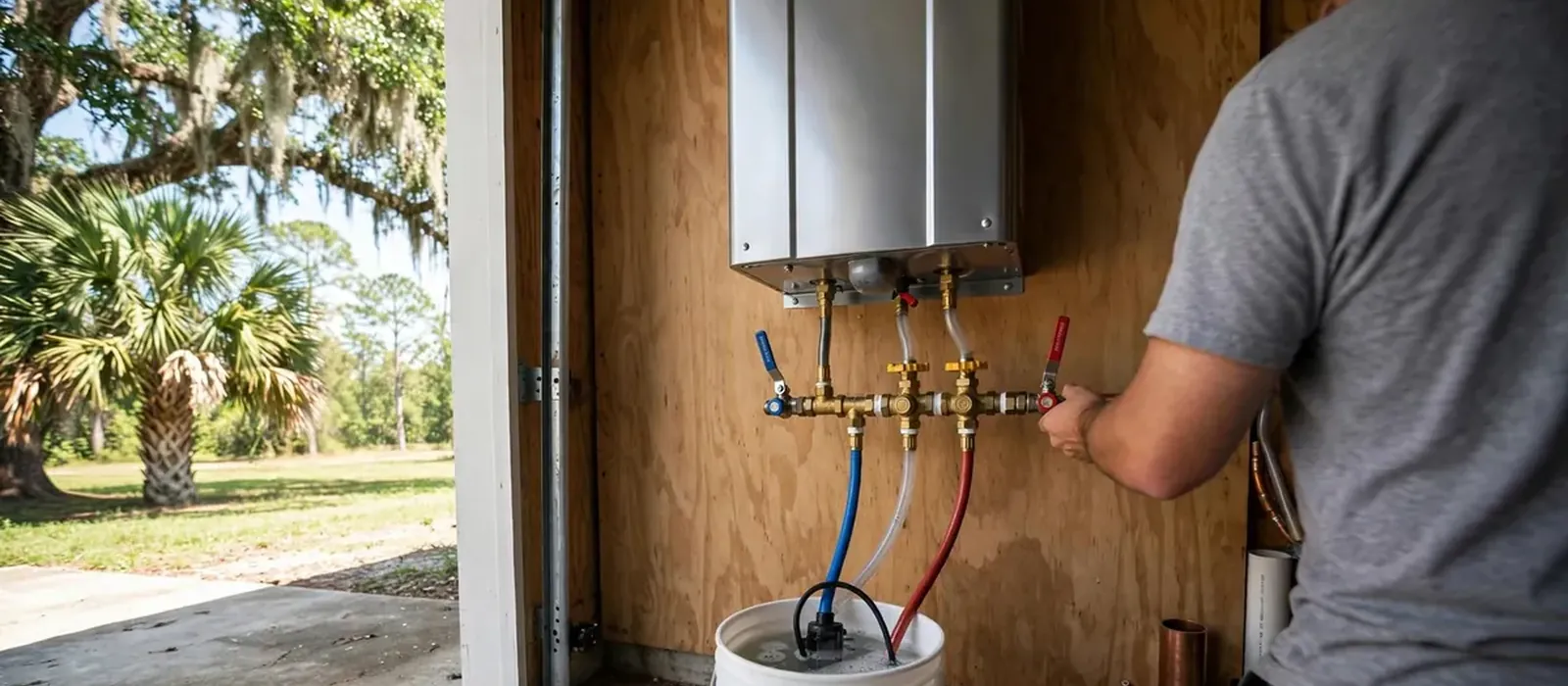
A flush means closing the isolation valves, circulating a descaling solution through the heat exchanger with a small pump, then rinsing. The solution and the time come from the manufacturer's manual. A flush cannot repair a failed part, so a technician checks the cause before descaling.
Hot water is weaker or cooler
Scale narrows the passages inside the heat exchanger. Flow drops and the burner or elements cannot heat the thinner stream evenly.
An error code with a beep
Codes differ by brand and can mean scale, a vent problem or a failed sensor. Read the manual, then call. Do not open the cabinet on a gas or electric unit.
Temperature swings mid-shower
Hot, cold, hot again often points to a clogged inlet screen or scaled sensor. Both are checked during service.
Years since the last service
If the unit was never flushed after install, assume it is due. An 18-year-old unit is near ENERGY STAR's 20-year expectation, so ask for a diagnosis before paying to descale.
Water around the unit
Shut off the water to the unit, and the gas or power if you can reach them safely, then call. A flush will not fix a leak.
What drives the cost of a tankless install
NerdWallet's national estimate, updated September 2025, puts tank water heater jobs at $600 to $2,500 and tankless at about $1,400 to $3,900 including installation. NerdWallet also says labor is over half the total. These are national figures, not Ocoee quotes, and your house can land outside them.
A homeowners policy usually responds to sudden and accidental damage, such as a heater that bursts and floods a room. It usually does not pay for wear, a slow leak or the heater itself. Ask your insurer before you rely on it.
Check these four things before you switch
Most surprises on a tankless job come from one of these. A quick look settles each before you commit.
| Check | What the technician looks at | Why it can change the plan |
|---|---|---|
| Gas supply | Line diameter, length and the other gas appliances on it | A higher-input unit can need a larger line, or a separate run. |
| Vent path | Wall or roof exit, run length, clearances to windows and eaves | The route sets the vent material and how much labor the job takes. |
| Electrical | Panel capacity and circuit size for an electric model, or power for a gas unit's controls | An undersized panel can make an electric tankless impractical. |
| Location | Wall space, access for service, and distance to the fixtures that use the most hot water | A long pipe run delays hot water at far fixtures, whatever the heater does. |
Ask any company whether it services your brand before you book. Some will replace a tankless unit but will not repair or flush one.
Ocoee water and a tankless heat exchanger
Ocoee Utilities' 2025 water quality report lists hardness at 5 to 6 grains per gallon. The city's own scale calls that moderate, with soft under 5 and hard over 12. Heat pushes dissolved calcium and magnesium out of water as scale, and a tankless heat exchanger has narrow passages. Plan on flushing on the maker's schedule rather than never.
Moderate is not severe. Many homes at this level manage with regular flushing and no softener. Ask the manufacturer whether it sets a water hardness limit for coverage, and read our water softener and filtration page to see when a softener pays off.
One exception on the city's map is Forest Lake Estates, which Orange County Utilities supplies. The hardness table is not labeled by service area, so a homeowner there should ask that utility for its own report.
Source type: Ocoee Utilities 2025 water quality report
How a tankless install visit runs
The order matters, because the survey decides the price and the permit decides the schedule.
Survey the house
The technician checks the gas line, vent route, electrical capacity and wall space, then explains what the unit needs. We also dispatch to nearby areas such as Winter Garden.
Agree the price and permit
You get a clear price before work starts. The permit is filed with the City of Ocoee Building Division at permits.ocoee.org.
Swap and connect
The old heater is drained and removed. The new unit is mounted, vented, piped with isolation valves and connected to gas or power.
Test and explain
The technician checks for leaks, checks gas connections, runs hot water at several fixtures and shows you the flush valves and inlet screen.
Tankless questions to settle before you buy
It is worth it when your tank is aging, hot water runs out in busy hours, or you want the floor space back. It is less compelling when the house uses little hot water, because savings follow usage.
If the gas line, vent path and panel all work without big changes, the case gets stronger. If they need major work, a tank can be the better buy.
Over time, yes, to a moderate degree. Ocoee Utilities' 2025 report lists 5 to 6 grains per gallon, which the city's scale calls moderate. Flush the unit on the manufacturer's schedule and clean the inlet screen when it is serviced.
The federal 25C credit does not apply to property placed in service after December 31, 2025. Duke Energy's water heater rebate excludes tankless units. Peoples Gas lists rebates for gas tankless to its own customers, so confirm your provider and the current terms before you count on it.
A flush helps when scale is the problem, and it cannot fix a failed part. We do not diagnose a unit over the phone, so tell us the brand, the age and any error code. If the unit is near 20 years old, ask what a repair is likely to buy you.
Look the code up in the manual, because meanings differ by brand. Check that the gas valve and water valves are open and the display has power. Do not take the cabinet apart, since gas, burners and wiring are inside. If the code returns, call.
Florida Building Code Section 105.1 requires a permit to install or replace a plumbing, gas or mechanical system. Ocoee runs plumbing and gas permits through permits.ocoee.org. For your exact job, the Building Division at 407.905.3104 can confirm the permit requirements.