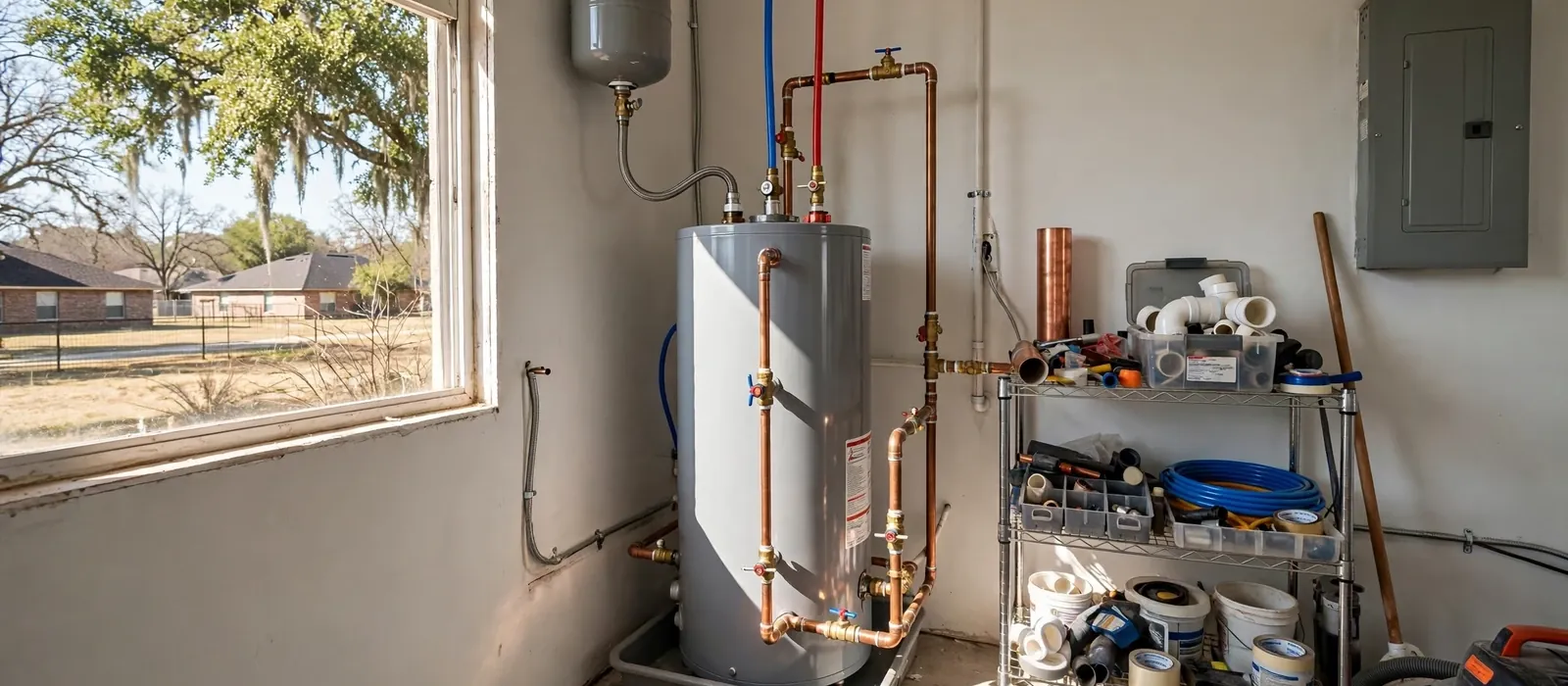
When a tank heater needs a pan under it
The Florida Building Code, Plumbing, says a storage tank water heater must sit in a pan where a leak from the tank would cause damage. The pan has an indirect drain pipe so that water has somewhere to go besides your floor. A plastic pan is not allowed under a gas-fired heater.
A replacement heater has a gentler rule. If the old installation never had a pan drain, the code does not make you add one just because the tank is new. The pan requirement itself still follows the damage test, so the installer looks at what the old setup was and what the new one needs.
The pan is there to catch a slow leak, not to fix it. Once water is in the pan, the heater or a fitting has a problem, and the pan only buys you time.
Where your heater sits, and what that means for the pan
The code does not list rooms. It asks whether a leak would cause damage, and the plumber and the building official apply that to your layout. This table shows how that usually plays out.
| Where the heater sits | What a leak would reach | What to expect |
|---|---|---|
| Attic, above a finished ceiling | Insulation, drywall and the rooms below, often before anyone sees water | A pan is the clear case. A slow drip can stain a ceiling long before you notice |
| Closet inside living space | Flooring, walls and neighboring rooms | A pan is expected, since a leak spreads into finished areas |
| Garage with a concrete floor | Boxes, stored items and the wall base | Ask the installer how the code applies, since damage is harder to define here |
| Utility room with a floor drain | Water may run to the drain | The plumber decides, and the drain may change what is needed |
| Any gas-fired heater | Same as above | Metal or approved non-plastic pan only, never plastic |
If you are unsure how the code reads for your house, ask your plumber before the heater is set, not after.
Water under the tank right now?
Shut off the cold supply to the heater, then call so a plumber can trace the source.
What to do if water is in the pan or on the floor
Treat any water under the heater as a live leak until a plumber says otherwise. Start at the cold supply valve above the tank and turn it off. An electric heater also gets its breaker switched off. A gas heater has a control marked for its off setting, so use the label on the unit.
A gas smell changes the plan. Get everyone outside, leave light switches alone, and call the gas utility or 911 from there before anything else.
A relief valve that drips or discharges is a sign for a plumber, not something to cap or plug. The relief valve is the safety device and is not meant to manage pressure from thermal expansion, so a drip points to a fault elsewhere. Our 24/7 line is open for a heater that is flooding a garage or ceiling.
Reading the water: where it comes from
Not every wet pan means a failed tank. A loose supply fitting, a weeping relief valve or a drip from a connection can each put water in the pan. A plumber follows the water back from the pan to the source, and the answer decides between a repair and replacement.
Rust at the base of the tank or water seeping from a seam is a different story, and usually a replacement job. If you are weighing it, our water heater repair visits look at fittings and valves first, and an old tank that leaks from the body is usually a swap with proper water heater installation and a pan that fits.
Ocoee Express Plumbing dispatches licensed plumbers for leaking heaters across Ocoee, Winter Garden and Windermere, with same-day appointments when available.
Which code edition applies on your date
The 2023 edition of the Florida Building Code is the one in force today. The Ninth Edition takes effect on December 31, 2026, according to a Miami-Dade County notice. Section numbers can shift between editions, so we do not quote them here.
For you, that means a heater installed or permitted after the new year may be judged under the newer book. Ask your plumber which edition applies to your permit date, and do not rely on an old article, ours included, for the exact wording.
Permits for a heater swap in Ocoee
Ocoee's FAQ lists plumbing among the work that needs a building permit, and permit applications go through permits.ocoee.org or the Building Division at City Hall, 1 N. Bluford Ave. The FAQ does not mention water heaters by name, and we could not confirm a water-heater-specific rule.
So call the Building Division at 407-905-3100 and ask how your swap is handled before the old tank comes out. Ask your plumber who applies for the permit and when the inspector will look at the pan and drain.
Source type: City of Ocoee Building Division permit FAQ
Pan and drain questions for Ocoee heaters
Not if the old installation had no pan drain. The code says a pan drain is not required for a replacement when one was not previously installed. A pan can still be required where leakage would cause damage, so the installer checks the location.
No. The code says a plastic pan shall not be installed beneath a gas-fired water heater. Use an approved metal pan or other approved material, and ask the plumber which fits.
No. Fittings, valves and connections can all drip into the pan. A plumber traces the water to its source and tells you whether the tank is the problem.
Plumbing work needs a permit under the city's FAQ, filed at permits.ocoee.org. We found no rule that names pans or heaters, so call 407-905-3100 and confirm for your job.
Close the cold supply valve at the heater and turn off its power. Keep clear of the area below if the ceiling is sagging. Then call us, because water in an attic ceiling can bring drywall down.