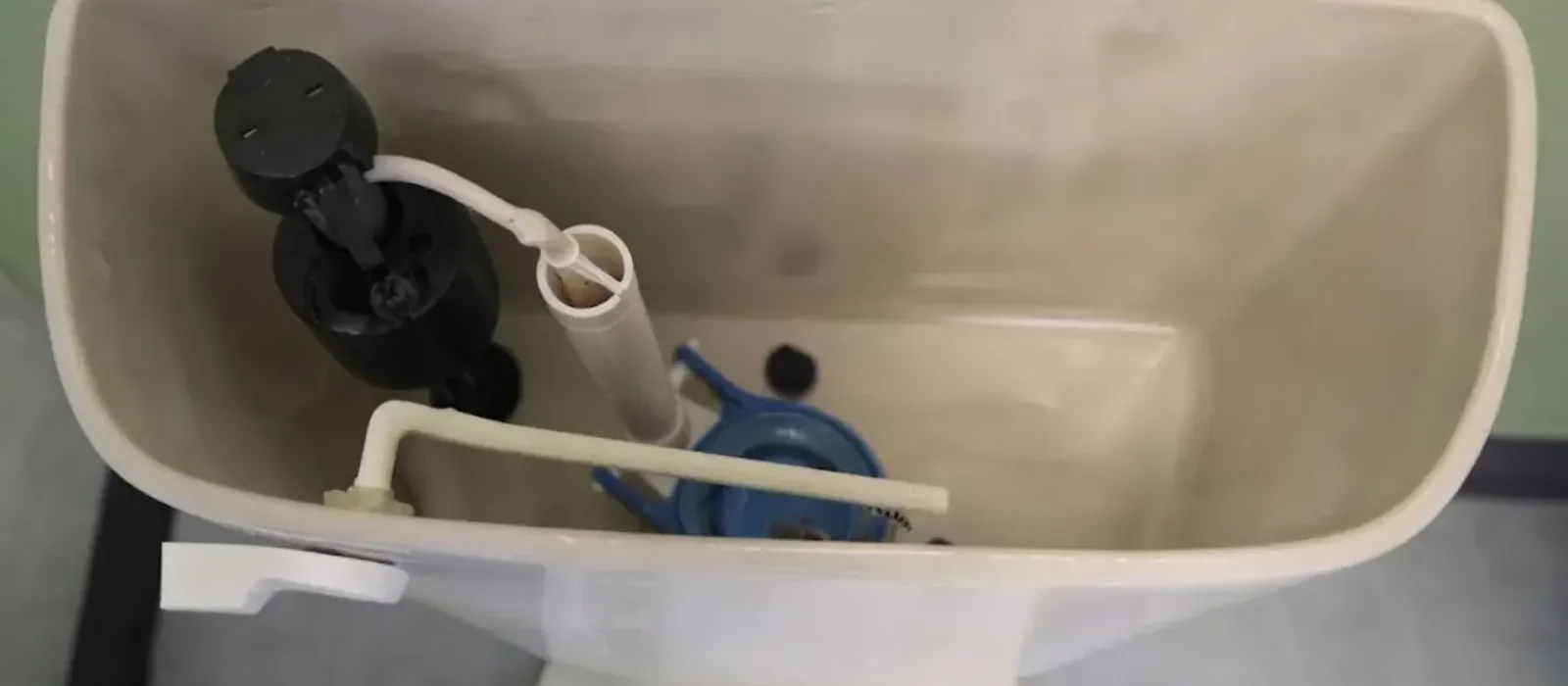
Toilet overflowing right now: shut the supply valve first
An overflowing toilet is an emergency, and the 24/7 line at Ocoee Express Plumbing is open for it. While you wait, stop the water at the toilet and do not flush again, since each flush sends more water into a bowl that cannot take it.
Find the small oval valve on the wall or floor behind the bowl and turn it clockwise until it stops. If it will not turn, do not force it. Close the main water valve to the house instead.
If the bowl is still rising, lift the tank lid and press the rubber flapper down to block the tank. Then put towels down and keep children away from the water.
Look at your other drains before you plunge. If the tub or a second toilet is gurgling or backing up too, the blockage is likely in the main line, so stop using water and ask about sewer line cleaning.
Signs your toilet needs repair
Most toilet failures announce themselves. Here is how each one usually shows up.
Running or hissing
Water trickles into the bowl after the flush ends, or the tank refills at odd times. It wastes water and can raise the bill.
Weak flush
The bowl empties slowly or needs two tries. The cause is often a partial clog, a worn flapper or clogged rim holes.
Loose handle
The handle spins limp, sticks or no longer lifts the flapper. The flush lever or its chain has usually come loose or broken.
Rocking bowl
The toilet moves when you sit down. That strains the seal underneath and often ends in a leak.
Water at the base
A damp ring or puddle around the bowl points to a failed wax ring or loose bolts. It can also hide a soft floor.
Clog that keeps coming back
One clog is ordinary. Repeat clogs, especially in more than one fixture, can mean a problem further down the line.
Water on the bathroom floor?
Shut the supply valve, then call. We dispatch day and night for overflowing toilets.
Symptom, part and fix
This is the short list a plumber works through, from cheapest part to biggest job.
| Symptom | Likely part | Usual fix |
|---|---|---|
| Runs after flushing | Flapper or fill valve | Replace the worn flapper or the fill valve |
| Handle limp or will not flush | Flush lever or chain | Replace the lever or reset the chain length |
| Weak or slow flush | Partial clog, rim holes or flapper | Clear the bowl and trap, then check the flapper lift |
| Rocks or leaks at the base | Wax ring, closet bolts or flange | Pull the toilet and reset it on a new wax ring |
| Water under the tank | Tank bolts or supply line | Replace bolt washers or the supply connector |
| Tank refills now and then | Slow flapper leak | Add food coloring to the tank, wait, and replace the flapper if color reaches the bowl |
A leaking supply valve at the wall is a valve job, not a toilet job, and it may need the house water shut off.
Repair or replace: where the 1.6 gallon line sits
Parts are cheap, so repair makes sense when the porcelain is sound and the toilet flushes well when it works. A flapper, a fill valve, a lever or a wax ring each fixes one failure without touching the rest.
Replacement makes sense when the bowl or tank is cracked, the flange is damaged, or the toilet has been repaired for the same fault several times. The 2023 Florida Building Code, Plumbing, Table 604.4 sets the maximum for a water closet at 1.6 gallons per flushing cycle. A new toilet you install must meet that limit.
If you do not know your toilet's flush volume, look for markings on the tank or bowl. An older toilet that uses more water costs more on every flush, which is a fair reason to replace it. We do not claim a 1.6 gallon toilet clogs more, because the code text does not say so.
What a toilet replacement visit looks like
Toilet work is quick when the floor underneath is sound. This is the usual order.
Shut off and remove the old toilet
The plumber closes the supply valve, drains the tank and bowl, disconnects the line and lifts the toilet off the floor.
Check the flange and floor
A cracked flange or a soft spot in the floor must be fixed before a new toilet goes down. This is where a straight swap can become a larger job.
Set the new toilet
A new wax ring seals the base, the bolts are tightened evenly, and a new supply line connects the tank. Fixture work like this is part of our wider plumbing installation service.
Test and clean up
The toilet is flushed several times and checked for leaks. Ask what is included for old toilet removal before work starts.
What affects the cost of toilet repair or installation
A flapper swap and a full replacement sit far apart. These factors set where your job lands.
Homeowners policies usually respond to sudden and accidental damage, such as water from a failed supply line, and often not to wear or a slow leak. They rarely pay for the toilet itself. Ask your insurer before work starts, and take photos of any water damage first.
Toilets in Ocoee homes, old and new
A few local facts affect which fix suits your house.
Older homes
A City housing report built on Census data says almost all Ocoee homes were built after 1960, and almost 88 percent after 1970. Toilets in many of those homes can be decades old, so tank parts can be hard to match and replacement may beat another repair.
Newer homes
We found no published data on when Ocoee's newest subdivisions went up, so we do not guess. What matters is the toilet's age. A newer toilet usually needs a flapper, fill valve or wax ring, not a replacement.
Permit rules
Florida Building Code section 105.2 exempts clearing stoppages, repairing leaks and removing and reinstalling a toilet, if no valves, pipes or fixtures are replaced or rearranged. Ocoee's page does not restate this, so call the Building Division at 407-905-3104 when your job moves pipes.
Wipes
We found no Ocoee wipes guidance. UF/IFAS says flushable wipes take longer to break down than toilet paper and may cause major blockages in sewer systems. Put wipes in the trash.
When it is not the toilet
Ocoee's wastewater runs through a City sewer system. If several fixtures back up together, the problem is the line, so a single stubborn drain is a drain cleaning job and a shared blockage belongs to the main line.
We also send plumbers to nearby Pine Hills for after-hours toilet calls.
Toilet repair questions we hear in Ocoee
Yes. Ocoee Express Plumbing dispatches licensed plumbers day and night, and an overflowing or leaking toilet is treated as an emergency. Same-day appointments are offered when available.
We do not diagnose a leak over the phone, so the first job is stopping the water. Shut the supply valve before you call.
Toilets bought and installed together often wear out together, so two flappers or fill valves failing is common. Do the food coloring test in each tank, since a running toilet can add a lot to the water bill. It is rarely one shared cause.
Do not force it. Shut the main water valve to the house and call. An old valve can break or leak when turned, and replacing it is a separate repair from the toilet itself.
Table 604.4 of the 2023 Florida Building Code, Plumbing, sets the maximum for a water closet at 1.6 gallons per flushing cycle. A toilet you install now has to meet it. The code is revised on a regular cycle, so ask the plumber which edition applies.
Florida Building Code 105.2 exempts removing and reinstalling a toilet when no valves, pipes or fixtures are replaced or rearranged. Ocoee lists plumbing among permit-required work. Ask the Building Division at 407-905-3104 about your scope, especially if drains are moving.
The price depends on the toilet you choose, the condition of the flange and floor, and whether the supply valve needs replacing. We do not quote it over the phone. You get a clear price before work starts.